
Reviews
Vertical Descent Navigator Arcade strips away unnecessary complexity and delivers a pure test of reaction time and priority management. The combination of automatic downward movement with player-controlled lateral dodging creates a tense rhythm. The timed tasks are the standout feature, forcing players to balance immediate survival against pressing objectives. Difficulty ramps smoothly, and the randomized layouts keep each run feeling fresh. It is an excellent choice for players who enjoy honing their skills through repeated short sessions.
Description
Core Descent Mechanics
The central loop places players in a constant downward motion. The character automatically falls, and the player’s role is to steer left or right to evade obstacles that appear in the path. Unlike many side-scrolling games, the vertical orientation changes how players judge distance and speed. Obstacles vary in shape and placement, requiring split-second lane changes. The lack of a pause during descent keeps the pressure consistent, making each session a test of sustained attention.
Timed Objective System
Scattered along the fall are interactive tasks marked by a visible countdown. These objectives demand immediate focus because ignoring them can prematurely end the run. Players must weigh the risk of dodging a nearby obstacle against the urgency of completing a task before its timer expires. This dual-layer decision-making adds a strategic element to what might otherwise be a simple avoidance game. Successfully completing an objective often clears the path ahead or grants a brief reprieve.
Progressive Difficulty Curve
As the descent continues, the falling speed gradually increases. Early segments allow players to learn obstacle patterns and timer placements at a comfortable pace. Later stages introduce tighter clusters of barriers and shorter countdowns on tasks. The difficulty does not spike abruptly but ramps steadily, giving players time to adapt. This curve ensures that beginners can make meaningful progress while experienced players still find a challenge in the later sections.
Visual and Interface Design
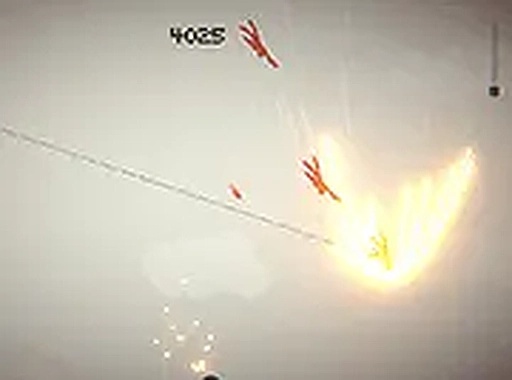
The interface is minimal, showing only essential information such as the current score and active timers. A full-screen mode is available for players who prefer an uninterrupted view. The visual style uses clear, high-contrast colors to make obstacles and task markers easy to spot against the background. This clarity is important because the fast pace leaves little room for confusion. The design prioritizes readability over decorative elements, keeping the focus on gameplay.
Session Structure and Replay Value
Each run is self-contained, lasting anywhere from a few seconds to several minutes depending on player skill. The randomized placement of obstacles and timed tasks means no two descents are identical. This variety encourages repeated play, as players try to beat their previous distance or score. The game does not rely on unlockable content or progression systems; the core appeal comes from improving personal performance. This straightforward structure makes it easy to pick up for a quick session without long-term commitment.







Comments
Sign in to comment
You must be logged in before posting a review or rating.
No account? Create one
No comments yet. Be the first to comment!