
Reviews
Interior Arrangement Puzzle succeeds by taking a simple concept—rearranging furniture—and turning it into a genuinely engaging puzzle experience. The levels are well-designed, with each new room introducing fresh constraints that require careful thought. The lack of a timer reduces stress, allowing players to focus on finding the perfect layout. The clean visuals and satisfying placement feedback add to the appeal. This is a solid choice for anyone who enjoys spatial puzzles or casual strategy games.
Description
Core Concept
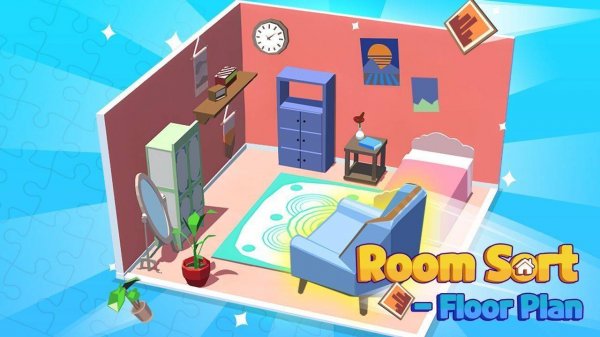
Interior Arrangement Puzzle turns the familiar task of tidying up into a series of engaging logic challenges. Players are presented with a room that contains a jumble of furniture, decorations, and everyday items. The goal is to reposition each object into a coherent floor plan that makes the space both functional and visually pleasing. This core loop of sorting and placing items forms the foundation of every level.
Room Variety and Themes
As players advance, they encounter rooms with different shapes and purposes. A cozy living room might require arranging a sofa, coffee table, and lamp in a way that leaves walking space. A kitchen could involve fitting cabinets, a table, and chairs around a central island. Each theme introduces new item types and layout constraints, ensuring that the puzzle-solving remains fresh.
Mechanics of Sorting
The interaction is straightforward: tap or click on an item to pick it up, then drag it to a new position. Items must be placed without overlapping, and some may have designated spots that are hinted by the room’s design. The challenge comes from the limited space and the need to decide which items belong where. Larger pieces often need to be placed first to open up room for smaller decorations.
Progression and Difficulty
Difficulty increases gradually. Early levels feature simple rooms with few items, allowing players to learn the controls and basic strategies. Later stages introduce more cluttered spaces, asymmetrical room shapes, and items that require careful rotation or stacking. This steady ramp keeps the game accessible to newcomers while still offering a satisfying challenge for experienced puzzle enthusiasts.
Visual Presentation
The game uses a clean, colorful art style that makes each room feel inviting. Furniture and decorations are rendered with enough detail to be easily recognizable, and the color palette changes with each theme to create distinct atmospheres. The visual feedback when an item snaps into place provides a small but satisfying reward that encourages continued play.








Comments
Sign in to comment
You must be logged in before posting a review or rating.
No account? Create one
No comments yet. Be the first to comment!